
Last updated November 25, 2026
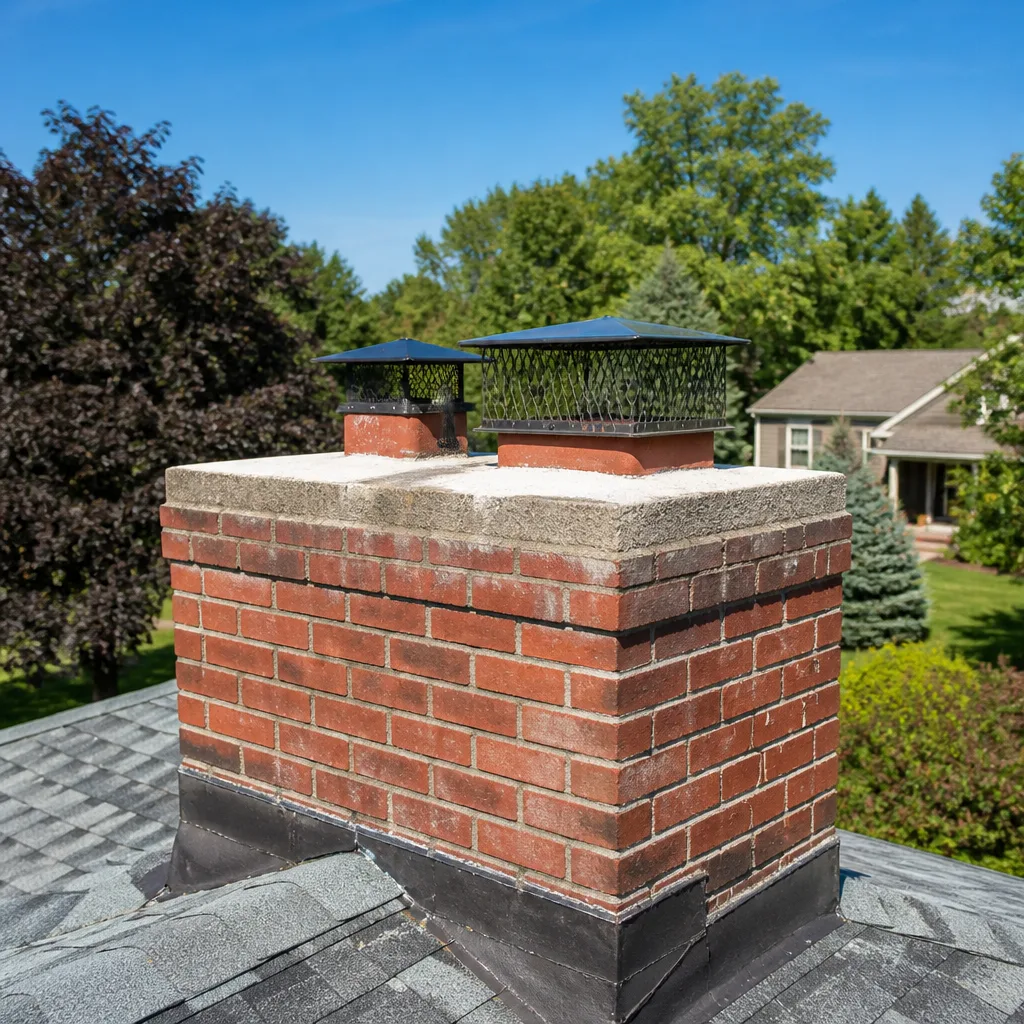 Sweep & inspection
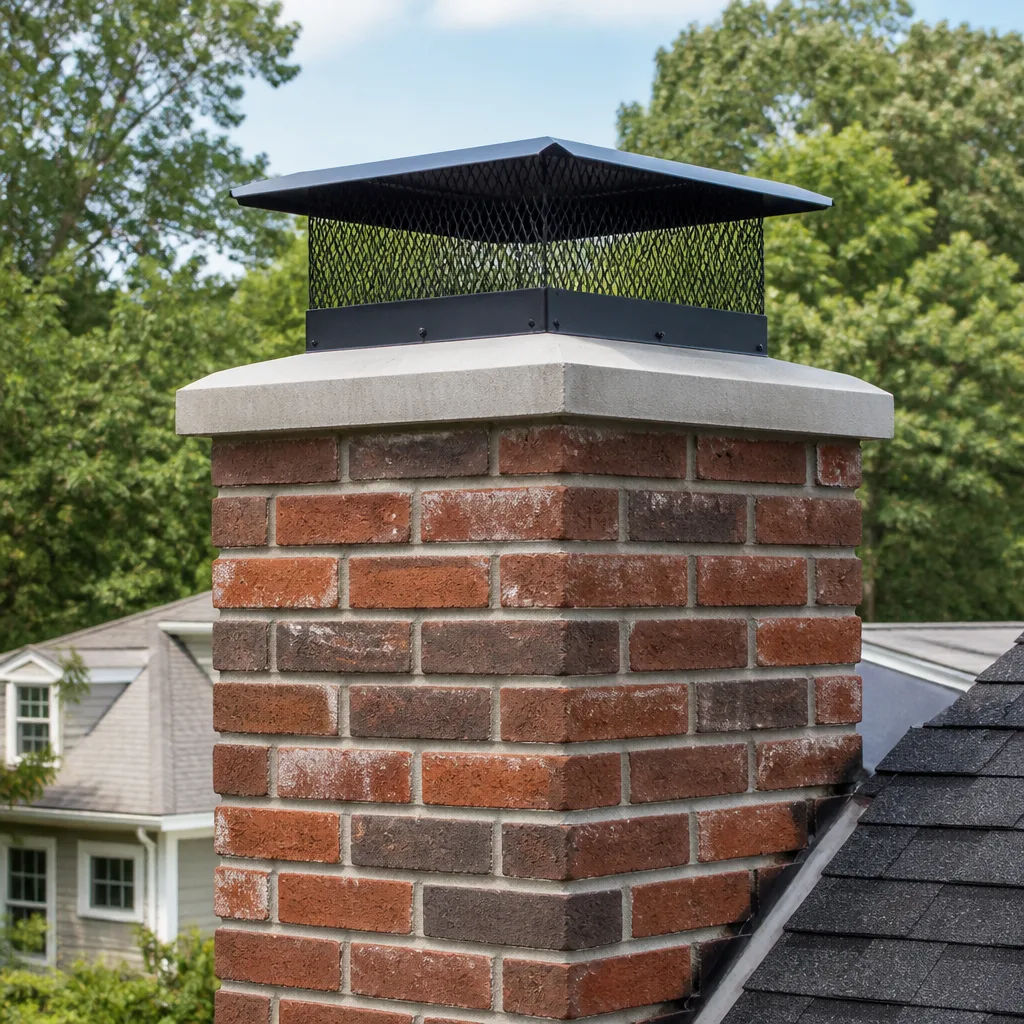 Caps & crowns
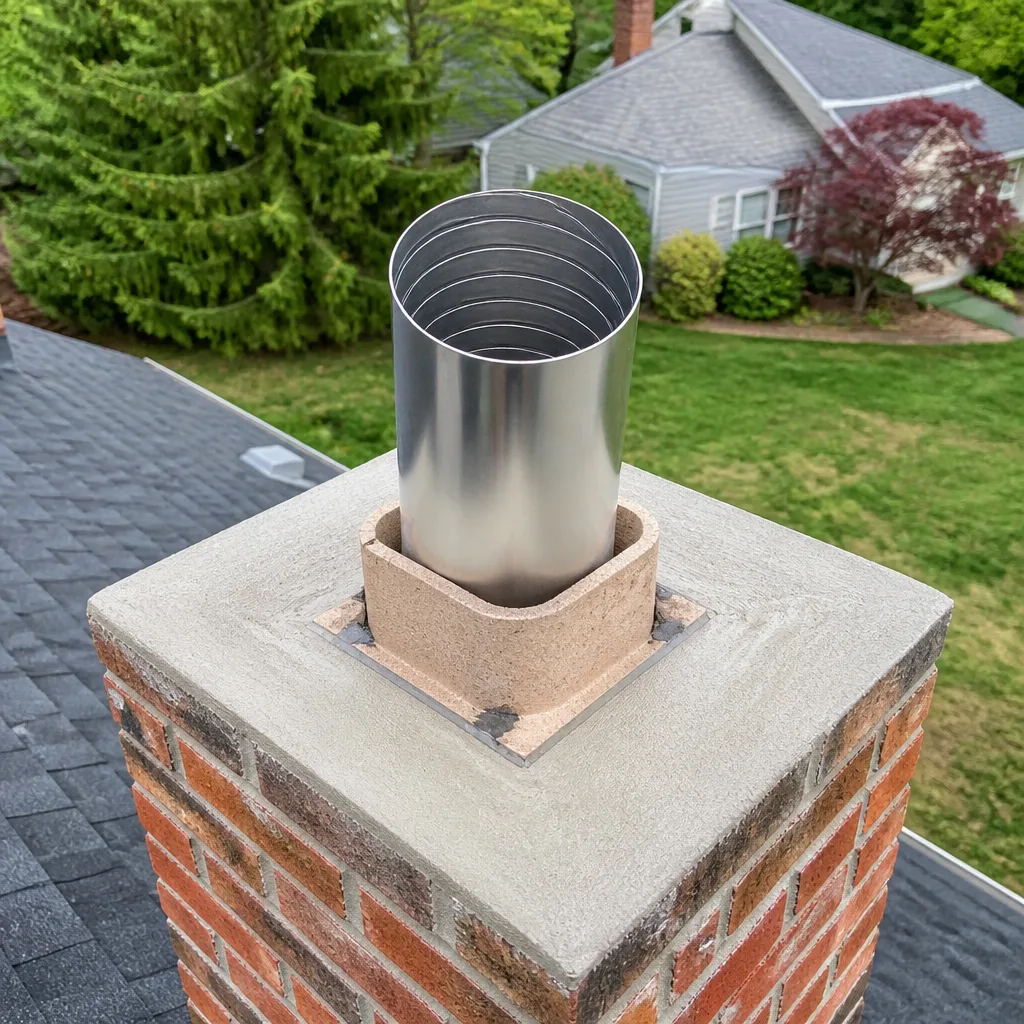 Flue relining
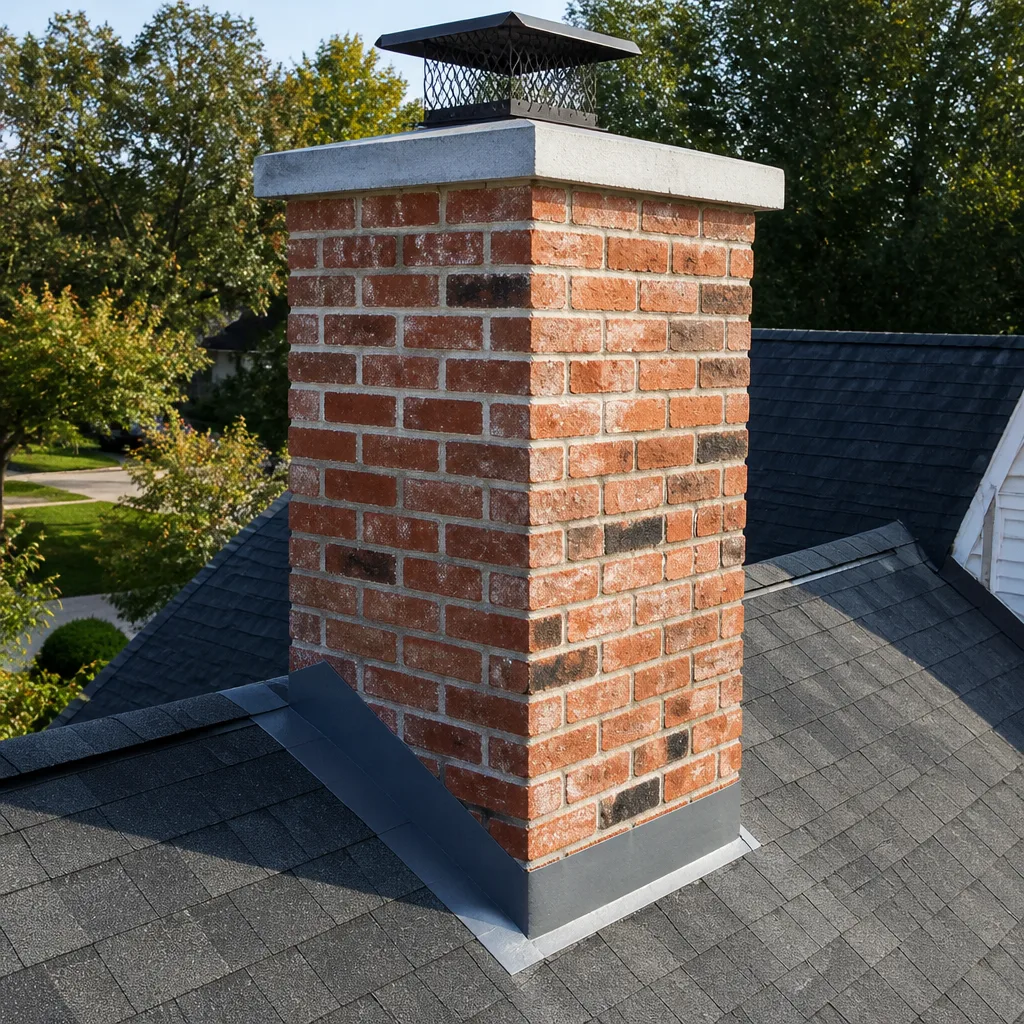 Masonry repair
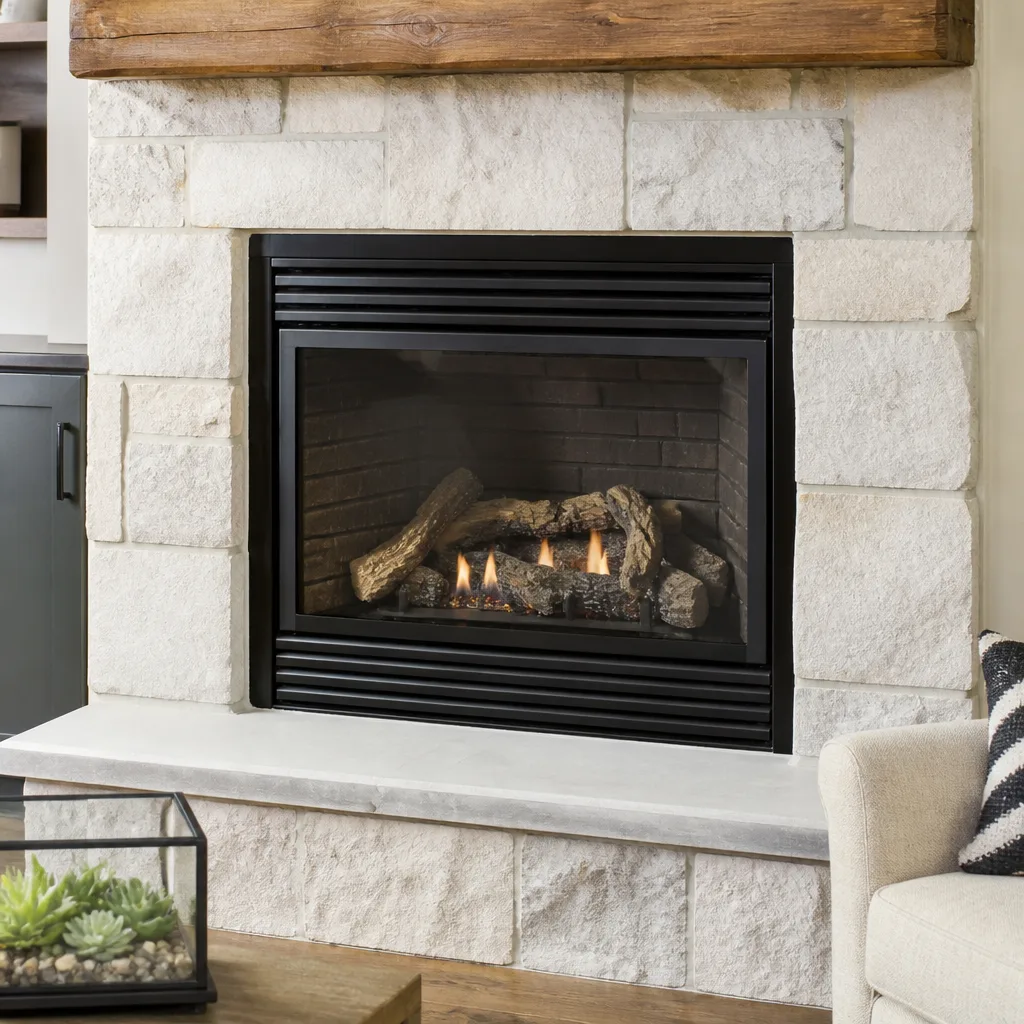 Gas fireplace service
Level 1 sweep and inspection to the NFPA 211 annual standard - flue, crown, cap, and flashing checked and photographed
Chimney sweep logs do not sweep chimneys. They loosen some creosote - which then falls where a brush and vacuum still have to collect it.
Chimney Cleaning Warning Signs: A Tacoma Homeowner’s Reference Guide
Most chimney problems announce themselves long before they become expensive, and most get dismissed as normal fireplace quirks. A little smoke spilling into the room gets called “just how this fireplace draws.” A musty smell in July gets called “Tacoma humidity.” A faint tap in the flue gets blamed on wind. Each of those symptoms actually points to a specific mechanical part that has failed, worn, or been sized wrong, and each has a specific fix. In this guide we decode what your chimney is telling you, symptom by symptom, so you can tell the difference between a nuisance and a problem worth booking. You’ll learn which stains mean moisture and which mean combustion, how draft actually works in Tacoma homes, and how to read your own firebox with a flashlight.
Quick Answer
The main chimney cleaning warning signs are heavy creosote buildup, smoke rolling back into the room, a campfire or musty smell when no fire is burning, white or black staining on the brick, cracked flue tiles visible in the firebox, and a roaring or rumbling sound from the flue. Any two of these together warrant a professional inspection before you burn again. A routine sweep is maintenance; these signs are your chimney asking for a diagnosis.
Styles & brands we work with
- Sweep & inspection
- Caps & crowns
- Flue relining
- Masonry repair
- Gas fireplace service
Table of Contents
- Why Chimney Warning Signs Get Missed
- Symptom-to-Cause Reference Chart
- Smoke in the Room: Draft Problems vs. a Dirty Flue
- White Staining vs. Black Staining on Brick
- Creosote: The Warning Sign Behind Most Others
- Reading Your Firebox With a Flashlight
- What a Chimney Fire Actually Sounds Like
- Common Mistakes to Avoid
- When to Call a Professional
Why Chimney Warning Signs Get Missed
A chimney is the one system in your house you can’t see working. You see the fire. You don’t see the flue, the smoke chamber, the damper, or the crown. That blind spot is exactly why small failures run for years before anyone acts on them. Homeowners in Tacoma tend to notice the fireplace in November and then ignore it until the following fall, which means a crack that opened in spring gets a full summer of rain and a full winter of heat cycling before anyone looks at it.
Two habits make the problem worse. The first is treating the fireplace as decorative. A wood-burning fireplace is a combustion appliance with a venting system, and it needs the same attention a furnace gets. The second is assuming that because the fire lights and burns, the chimney is fine. Fires light in badly compromised chimneys all the time. The system pulls smoke up and out even when the flue liner has a gap or the smoke chamber is coated in glaze.
What actually helps is knowing the short list of symptoms that mean “something mechanical has changed.” You don’t need to inspect anything yourself. You need to recognize the handful of signals that turn a routine sweep into a diagnostic call. Once you know the list, you’ll spot a change in your own fireplace faster than any annual reminder. And you’ll know which changes are cosmetic and which ones mean stop burning until someone qualified has looked at it.
Symptom-to-Cause Reference Chart
This is the core of the guide: what you’re seeing or smelling, the part most likely responsible, and how seriously to take it. Use it to decide whether to book a sweep, book an inspection, or stop using the fireplace until a technician can get there. The severity column is a rough triage, not a diagnosis. Only a proper inspection confirms the cause.
- Symptom: Smoke rolls into the room when you light a fire. Likely cause: draft failure from flue height, flue size mismatch, or negative pressure in the house. Severity: moderate to high, depending on cause.
- Symptom: Campfire or smoky smell on a rainy day, no fire burning. Likely cause: damper seal failure pulling outdoor air and creosote odor back down the flue. Severity: moderate. Fixable, but it will keep returning until the seal is addressed.
- Symptom: Musty, earthy smell in summer. Likely cause: moisture entering through the crown, cap, or flashing. Severity: moderate to high. Water is the most destructive force on a masonry chimney.
- Symptom: White, powdery staining on exterior brick. Likely cause: efflorescence, salts pushed to the surface as moisture migrates through the masonry. Severity: moderate. Tells you water is getting in somewhere.
- Symptom: Black, glossy staining on the exterior or at the top of the firebox. Likely cause: incomplete combustion and heavy creosote, often from burning unseasoned wood or a starved air supply. Severity: high. Glazed creosote is fuel sitting in the flue.
- Symptom: Visible crack lines inside the firebox. Likely cause: cracked or spalled flue tile from heat cycling. Severity: high. Stop burning until it’s inspected.
- Symptom: Roaring, rumbling, or a sound like a low-flying plane from the flue. Likely cause: a chimney fire. Severity: emergency. Get out, call the fire department, then call a chimney professional.
- Symptom: Bits of debris on the smoke shelf or damper, or flakes of liner material in the firebox. Likely cause: spalling flue tile or a failing liner. Severity: high. Liner fragments mean the barrier between smoke and structure is breaking down.
If you see two or more of these, book an inspection rather than a sweep. The difference matters. A sweep cleans; an inspection diagnoses. We offer a standalone inspection so you can get an honest read on the system before committing to any work at all.
Smoke in the Room: Draft Problems vs. a Dirty Flue
Smoke spilling into the room is the symptom homeowners most often misdiagnose. The instinct is “the chimney needs cleaning,” and sometimes that’s right. But a dirty flue is only one of several reasons a fireplace won’t draft, and cleaning a chimney that’s already clean won’t stop the smoke. You need to know which problem you have before you pay for a fix.
Draft is a physical system, and it depends on three things: the height and shape of the flue, the size of the opening relative to the flue, and the air pressure inside your house. When any of those goes out of balance, smoke comes down instead of going up. A flue that’s too short or too wide for the firebox can’t pull a strong enough column of warm air. A firebox opening that’s been enlarged for a fireplace insert, or reduced with a smaller opening, changes the equation. And a house that’s tightly sealed with modern windows and weatherstripping can go negative pressure, which means the chimney tries to pull replacement air back down the flue.
Here’s how to tell a dirty flue from a draft problem without opening anything up:
- Light the fire and watch where the smoke goes. If it drifts upward and out fairly cleanly once the fire is established, the draft is working and the problem may be buildup. If it rolls out the top of the opening and hangs, that’s a draft failure.
- Crack a window near the fireplace and light the fire again. If the smoke suddenly starts drawing, your house is running negative pressure. The chimney is fine. The house is the problem.
- Notice whether it happens on windy days or cold days only. Draft failures that appear under specific weather conditions point to flue height or a nearby roofline, not to creosote load.
- Check the top of the firebox and smoke shelf for soot patterns. Heavy uniform blackening across the whole firebox suggests long-term draft trouble. Blackening in one corner or along one side suggests a specific obstruction.
- Ask when it last drafted well. If the fireplace always smoked, it was never sized right. If it started smoking this year, something changed: a liner crack, a bird’s nest in the flue, a remodel that tightened the house, or a damper that no longer opens fully.
Draft problems in Tacoma have a local twist. The marine layer that pushes through the Puget Sound area means our air pressure changes fast and often, and a chimney that drafts fine on a dry cold night can struggle on a damp morning. This is one reason we treat a sudden change in draft behavior as a signal worth an inspection rather than something to shrug off.
White Staining vs. Black Staining on Brick
The color of the staining on your chimney is diagnostic. White and black come from completely different causes and require completely different responses. Getting them confused leads to wasted money on the wrong repair.
White staining: efflorescence and moisture
White, powdery, or chalky staining on exterior brick is efflorescence. It’s the visible result of water moving through the masonry, dissolving salts out of the brick and mortar, and depositing them on the surface as the water evaporates. Efflorescence itself is harmless. What it tells you is not. Water is inside the masonry. That water is getting in through a common entry point: a cracked crown at the top of the chimney, a missing or undersized cap, failing flashing where the chimney meets the roof, or a masonry joint that’s opened up and isn’t shedding water anymore.
The response to efflorescence is to find and stop the water, then seal the masonry the right way. Painting over it or applying a clear sealer without fixing the source traps moisture inside, and trapped moisture is what actually destroys chimneys. Freeze-thaw cycling in western Washington winters pushes spalling into overdrive once water is in the brick. A chimney cap & crown inspection is often the first step, because that’s where most water gets in.
Black staining: combustion and creosote
Black staining is a combustion story, not a water story. Black soot at the top of the firebox, on the damper, or visible on the exterior near the top of the chimney tells you the fire is producing more smoke and unburned fuel than the flue can carry away cleanly. That usually comes from one of three things: burning wet or unseasoned wood, running the fire with too little air (closing the damper down too early), or a flue that’s underperforming so badly that smoke lingers long enough to condense on the walls.
The response to black staining is different. You need a sweep to remove the creosote, then an inspection to understand why the fire isn’t burning cleanly, then a look at how you’re operating the fireplace and what fuel you’re using. If the black staining is accompanied by a glazed, tar-like coating on the flue walls, that’s stage-three creosote, and it’s a chimney fire waiting for a spark. Black staining doesn’t get fixed by cleaning alone. It gets fixed by addressing how the fire burns.
Creosote: The Warning Sign Behind Most Others
Almost every serious chimney problem traces back to creosote, so it’s worth understanding what it is and how it accumulates. Creosote is the residue left behind when wood smoke cools on the flue walls. It starts as a fine dust, becomes a flaky crust, and eventually forms a glazed, tar-like coating that’s very hard to remove. That glazed stage is the dangerous one, because creosote at that stage is highly combustible.
What makes creosote accumulation worse in this region is the fuel. Wood that hasn’t been seasoned properly burns cool and produces more smoke, which means more creosote. In Tacoma, buying firewood in fall and burning it right away is one of the most common ways to build up creosote faster than you’d expect. Wood should be split and dried long enough that it’s ready before you burn it, and it should sound hollow and show cracks in the end grain before it goes in the firebox.
Here’s how creosote stages break down, roughly:
- Stage one: A light soot and flake layer. Removed with a normal sweep.
- Stage two: A denser, sometimes glazed crust. Takes more work to remove and often signals a draft or fuel problem.
- Stage three: A hard, tar-like glaze. Requires specialized removal. This is the stage that actually fuels a chimney fire.
The stage of creosote matters less than whether it’s accumulating at all. A clean flue stays clean when the fire burns hot and clean and the fuel is dry. A flue that builds creosote quickly is telling you something about how the system is running. That’s the reason a professional chimney sweep is about diagnosis as much as cleaning. The sweep tells you how much creosote came out and at what stage, and that read is useful information.
Reading Your Firebox With a Flashlight
You can’t inspect your own flue. But you can read the firebox, and the firebox will tell you a lot about the flue above it. A flashlight and a hand mirror are all you need, and this check takes about two minutes. Do it in the off-season when the fireplace is cold and clean. Never do this with a fire burning or embers still glowing.
- Open the damper and shine the flashlight up into the smoke chamber. Look for daylight. You shouldn’t see any. If you see it, the flue isn’t carrying the full column of smoke and something is cracked or missing.
- Use the mirror to look at the inside walls of the firebox. Angle the mirror so the flashlight reflects along the firebox walls and up toward the flue opening. You’re looking for crack lines in the firebrick.
- Look for signs of spalling. Spalling is when masonry flakes and chips off. If you see chips or fragments at the bottom of the firebox that aren’t ash, those came from somewhere above and warrant an inspection.
- Look at the damper for rust or a poor seal. A damper that doesn’t close flush allows air and odor to leak into the room even when the fireplace is cold.
- Check the firebox floor for cracks wider than a hairline. Hairline cracks in firebrick are common and often cosmetic. Wider cracks let heat reach the structure behind the firebox, which is a real problem.
- Note the smoke shelf at the back of the firebox. It’s a ledge just behind the damper. Debris on it, especially debris that isn’t ash, points to something coming down the flue.
A flashlight-and-mirror check is not an inspection. It’s a screening tool that tells you whether to book an inspection. If you find cracked firebrick, spalling, or debris that isn’t ash, stop burning until a professional can look at it. The flue liner sits directly above the smoke chamber, and a crack up top won’t show in the firebox. Only a camera inspection confirms what the full flue looks like. That’s why every proper inspection includes one, and why you should see the photos yourself.
What a Chimney Fire Actually Sounds Like
Chimney fires don’t look like a fire in a fireplace. If a fire breaks out in the flue, you may see nothing at all from inside the house. The sound is the tell, and it’s the sound most people misidentify. We’ve talked with enough homeowners to know that a chimney fire gets mistaken for wind, for a jet, for the furnace, or for something settling in the walls.
The specific sound profile of a chimney fire is a low, roaring rumble, similar to a freight train passing in the distance, or a deep whooshing like a large gas burner igniting. It can be continuous or come in pulses, and it often builds in intensity. You might also hear a series of sharp popping or tapping sounds, which are creosote deposits igniting and expanding. The combination of a roar and a popping sound from the flue means a chimney fire is in progress.
What it doesn’t sound like: wind whistling through the top of the cap, which is higher-pitched and more constant. Structural settling, which produces single creaks and ticks rather than a sustained roar. The furnace or air handler turning on, which is a mechanical hum you’ll recognize. If you aren’t sure what you’re hearing and any of the roar-or-pop description fits, treat it as a chimney fire.
If you suspect a chimney fire, the response is direct:
- Get everyone out of the house and call 911.
- If you can do it safely on the way out, close the fireplace doors or the damper to reduce air going to the fire.
- Do not put water on the fire in the firebox. The combination of steam expansion and thermal shock can crack the flue.
- Do not re-light the fireplace until a professional has inspected the full length of the flue with a camera.
After a chimney fire, the creosote that caused it has burned away, but the damage it caused hasn’t. The intense heat can crack flue tiles, warp dampers, and open up gaps in the mortar joints. The full inspection that follows is not optional. The flue that survived a fire without visible damage from the outside may still have cracks only a camera will show. We can work with your insurer on the claim and include the camera photos you’ll need, but the inspection itself is the priority.
Common Mistakes to Avoid
- Burning wet wood because it was cheaper. Wet wood produces more smoke, more creosote, and less heat per cord. You’ll spend more on sweeps and repairs than you saved on the wood itself.
- Assuming a clean sweep means a healthy chimney. Sweeping removes creosote. It doesn’t tell you whether the crown is cracked, the flashing is failing, or a flue tile is spalling. An inspection does, and it can be booked on its own.
- Painting over efflorescence. White staining means water is inside the brick. Paint traps it there, and trapped moisture is what pushes off the brick face over a few seasons. Find the water source first.
- Burning through a smoking fireplace. Smoke rolling back into the room isn’t normal, and continuing to burn risks carbon monoxide in the living space. Crack a window to test the theory, then book an inspection.
- Hiring a sweep who won’t show you the camera photos. The whole point of a camera inspection is that you see what the technician sees. No photos, no evidence. Nothing gets recommended without it, and it’s fine to say so.
- Skipping the cap. A missing or damaged cap lets rain, animals, and debris into the flue. It’s one of the cheapest protections on a chimney and one of the most commonly neglected.
- Treating a loud flue as wind. If it sounds like a rumble or a train, it isn’t wind. Get out and call 911.
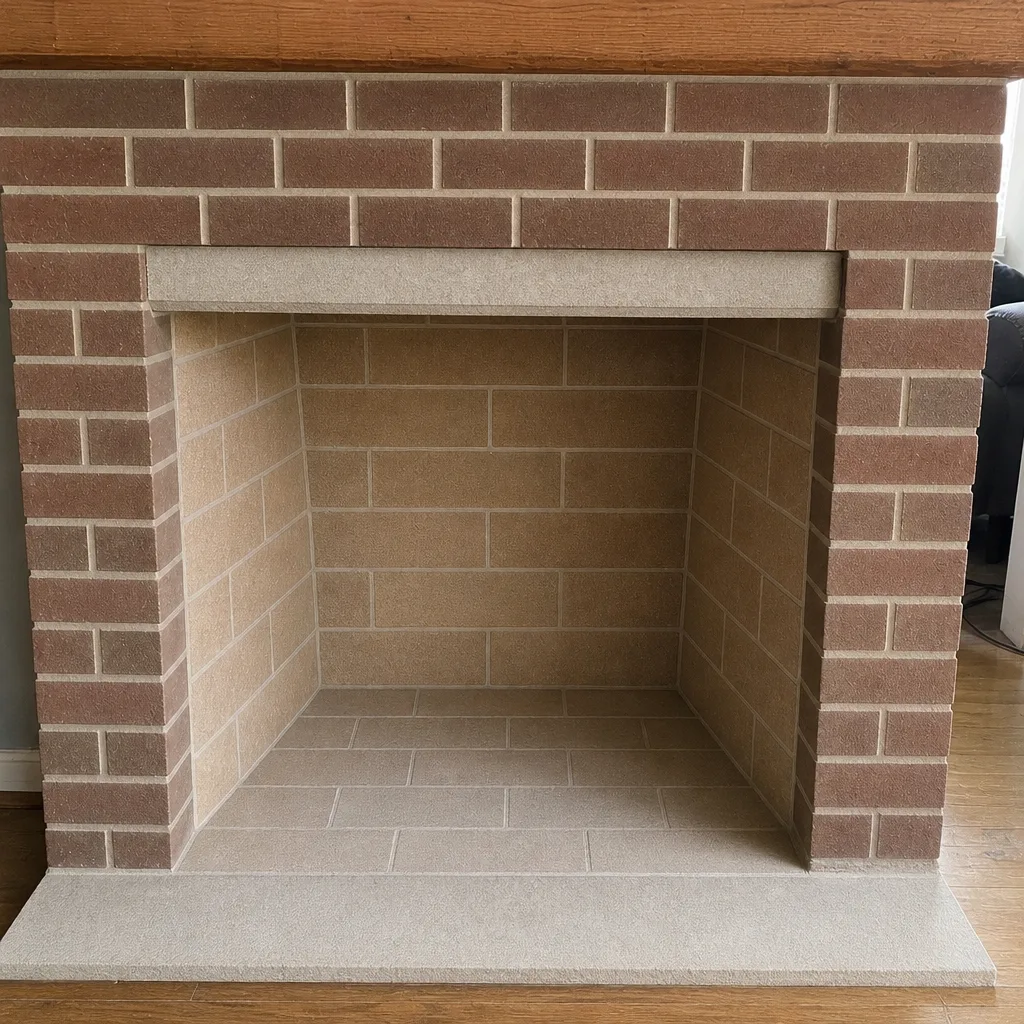
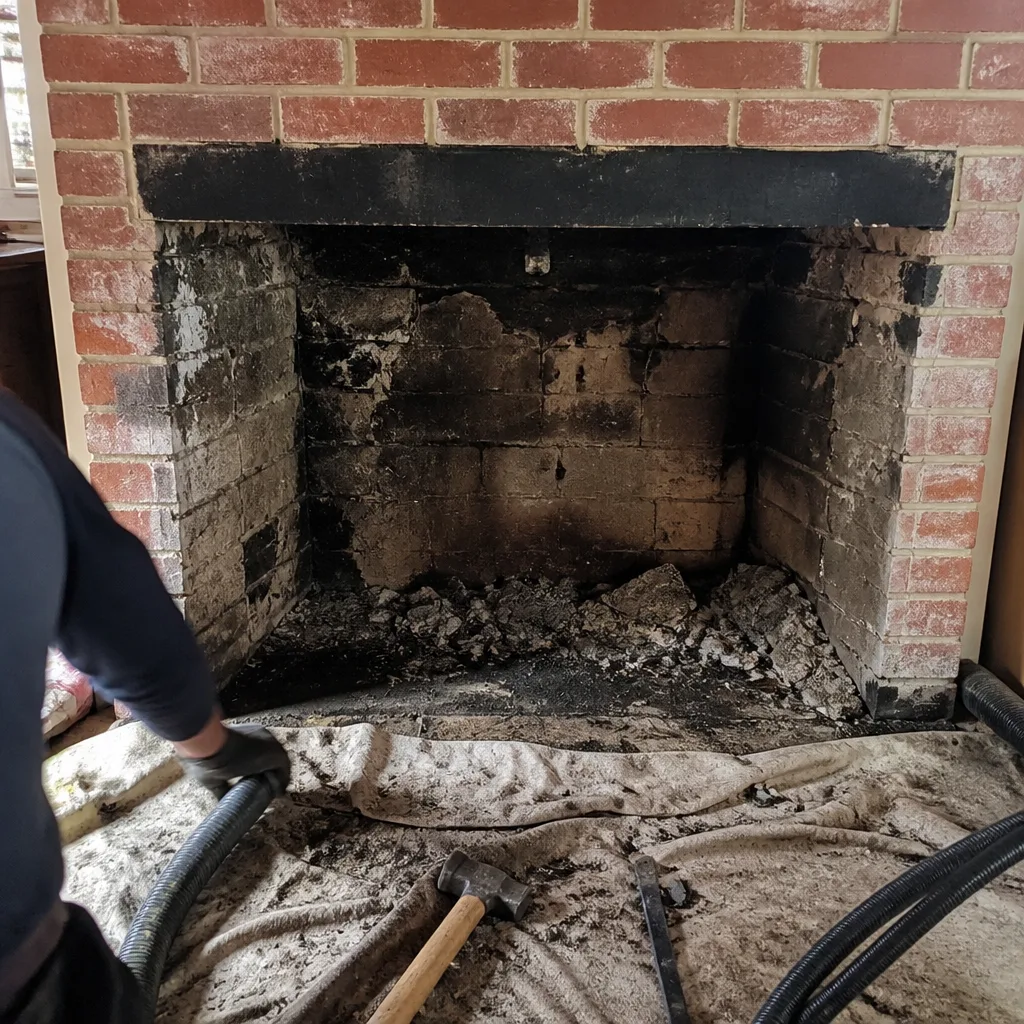
See the difference
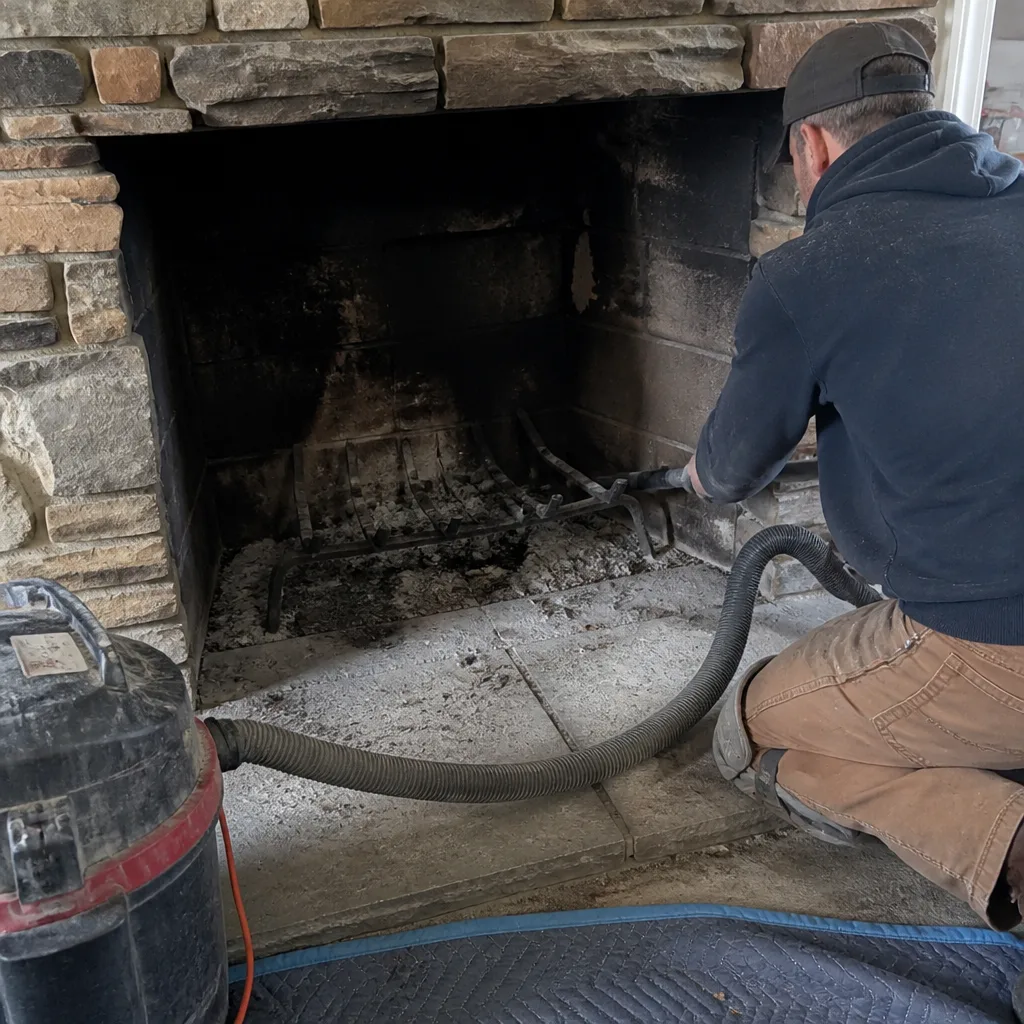 Before
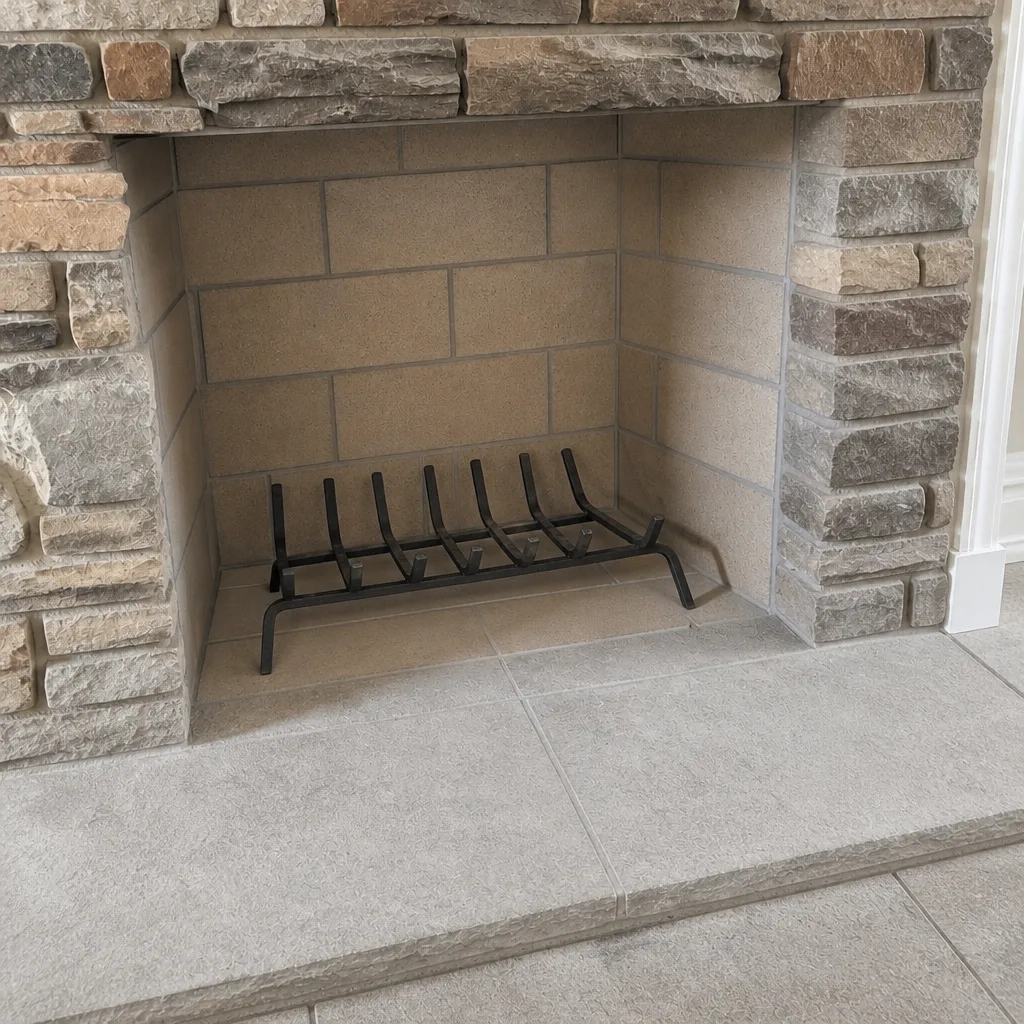 After
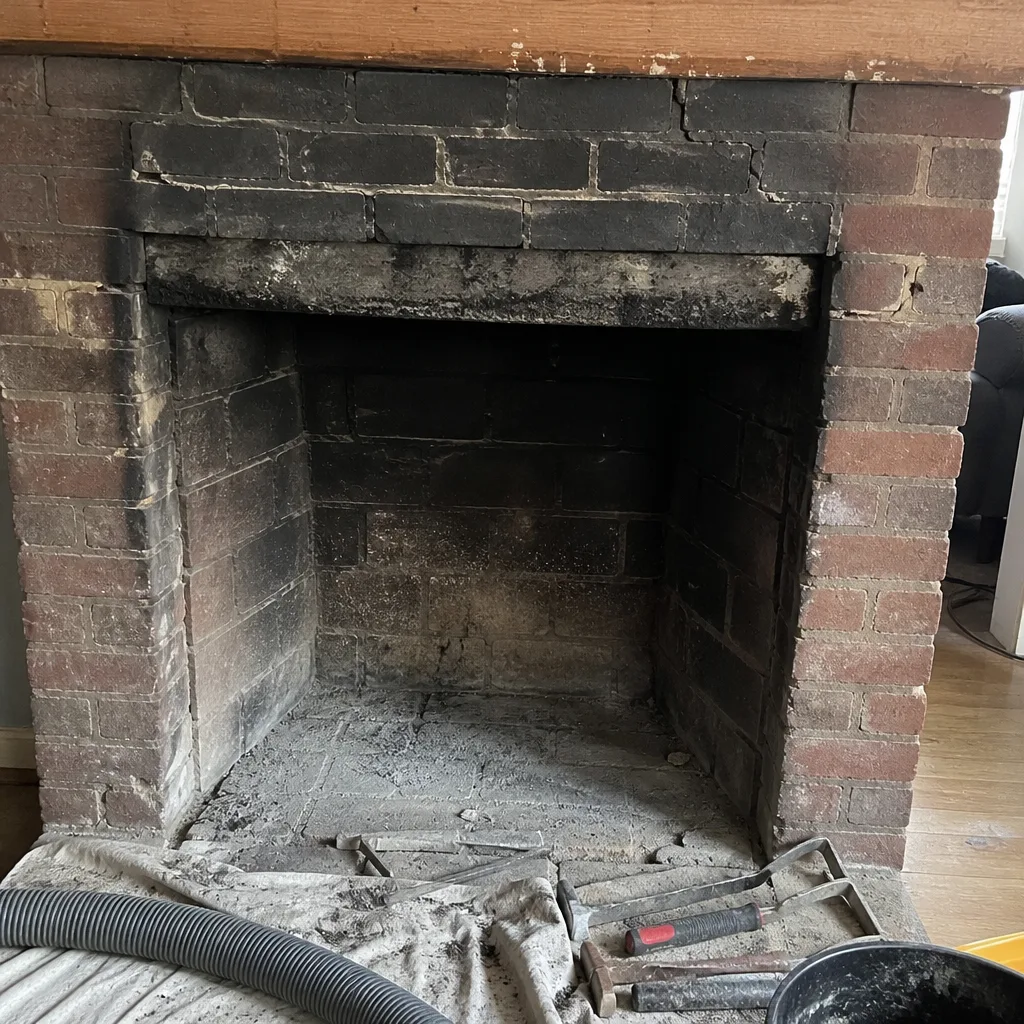 Before
 After
 Before
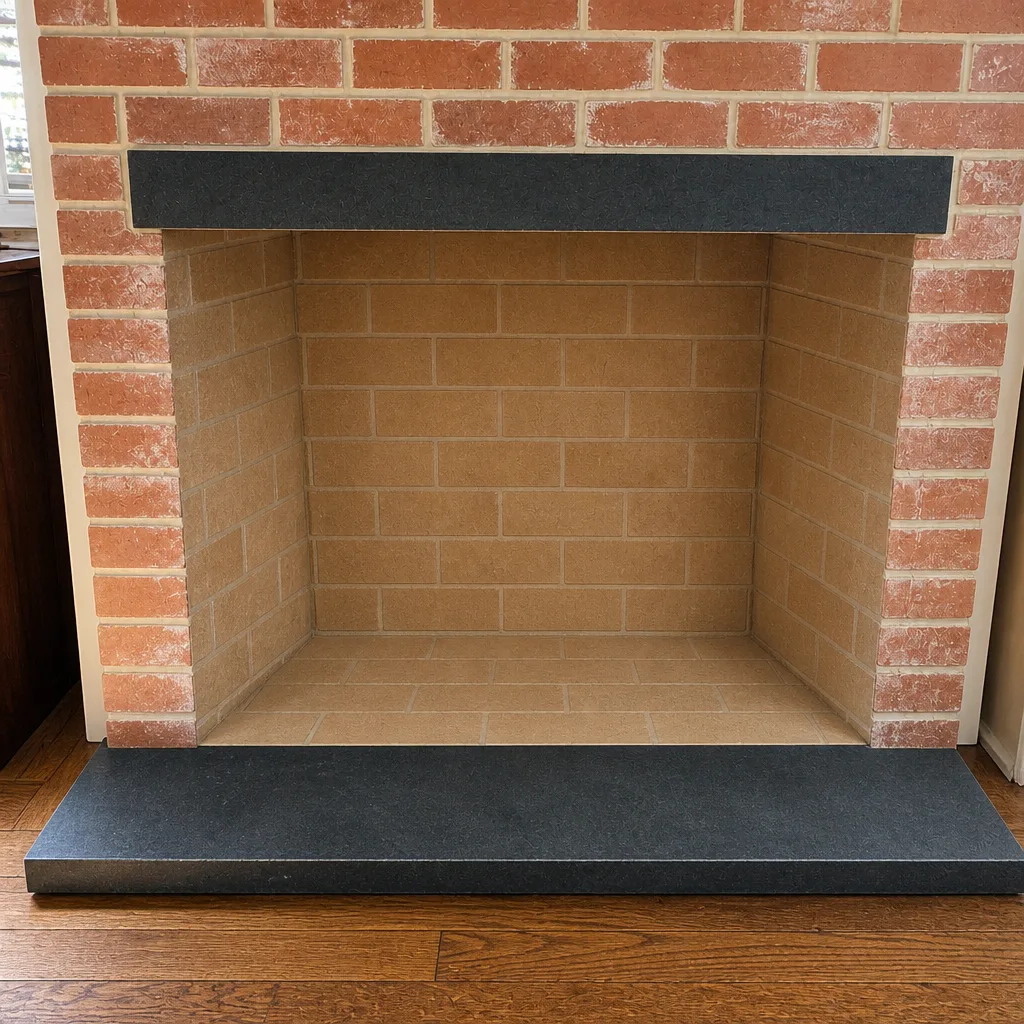 After
When to Call a Professional
Call a professional if you see any of the following:
- Smoke enters the room during ordinary use, not just at light-up.
- You see cracks, spalling, or flakes of liner material in the firebox.
- White or black staining appears on the exterior brick, or a musty smell develops in summer.
- You smell a smoky odor in the room when no fire is burning, especially on damp days.
- You’ve had a chimney fire, or you suspect one from the sound alone.
- It’s been more than a year since the last sweep, regardless of how often you burn.
- You’re buying a house and want the chimney inspected before closing.
Any single item on that list is enough. A sweep is maintenance and can be scheduled whenever it’s convenient. An inspection is a diagnostic and gets booked when something has changed. If you aren’t sure which you need, we can talk through the symptoms and recommend the right one. Nothing gets recommended without camera evidence you can see for yourself, and we’ll tell you plainly when a repair can safely wait. Our technicians have up to 10 years of experience and work with professional-grade materials like HeatShield and Olympia Chimney, so when a repair does make sense, we can handle the whole chimney from the firebox to the crown. Tacoma Chimney Sweep Co offers free estimates in Tacoma. Call (844) 945-4427. We answer 24/7. Fast dispatch from 7am to 7pm, Sunday through Friday.
Frequently Asked Questions
Once a year is the standard recommendation for a wood-burning fireplace, and more often if you burn heavily or notice creosote building quickly. In a wet climate like Tacoma’s, the annual visit also catches moisture damage early, which is half the reason to book it. Call (844) 945-4427 for an exact quote. Estimates are free.
Watch for black staining at the top of the firebox, a smoky smell when the fireplace is cold, and slower, smokier burns than you used to get. Glazed or tar-like coating on the flue walls means stage-three creosote, which needs professional removal. A camera inspection stages it accurately. Call (844) 945-4427 to book one.
That smell is usually a damper seal failure. When the damper doesn’t close flush, drops in outdoor air pressure pull creosote odor down the flue and into the room. A chimney in Tacoma often smells on damp days for exactly this reason. The fix is a new seal or damper, not another sweep. Call (844) 945-4427 and we’ll take a look.
No. Smoke in the room is often a draft problem from flue height, flue size, or negative pressure in the house, and it can happen on a perfectly clean flue. Crack a window near the fireplace and try to light a fire. If the smoke draws, the house is at negative pressure and the chimney isn’t the source. Call (844) 945-4427 for an inspection if it keeps happening.
That white powder is efflorescence, which is the visible sign that water is moving through the masonry and depositing salts at the surface. It’s not structural damage on its own, but it points to a water entry point, often the crown, cap, or flashing. Fix the source before sealing anything. Call (844) 945-4427 for a free estimate on the repair.
A new liner is recommended when camera inspection shows cracked, spalled, or missing flue tiles, or when the current flue is the wrong size for the appliance. That’s the only evidence that should drive the decision, and you should see the photos yourself. We work with DuraFlex and HeatShield liner systems. Call (844) 945-4427 to book an inspection first.
The Bottom Line
Chimney warning signs are specific, and each one has a specific cause. A campfire smell on a damp day is a damper seal. White staining is moisture. Black staining is combustion. Smoke in the room is usually draft. A roar and a pop from the flue is a chimney fire. Cracked flue tiles need a camera to confirm, not a guess. If you live in Tacoma and any of these signs has shown up, book a sweep if it’s been more than a year or book an inspection if something has changed. Nothing gets recommended without evidence you can see. Our technicians have up to 10 years of experience and work the full chimney from the firebox to the crown with professional-grade materials. Call (844) 945-4427. We answer 24/7. Fast dispatch from 7am to 7pm, Sunday through Friday. Estimates are free.
Written by the team at Tacoma Chimney Sweep Co.