
Last updated November 25, 2026
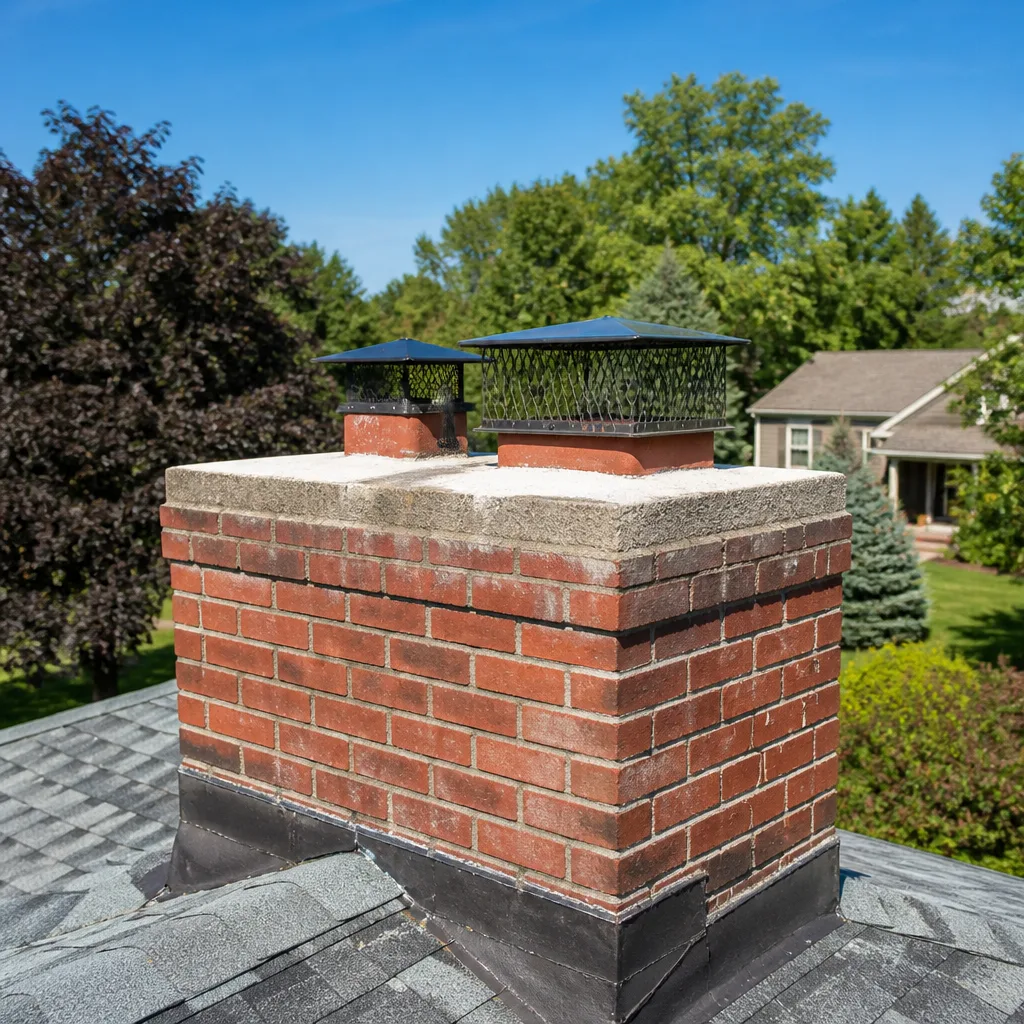 Sweep & inspection
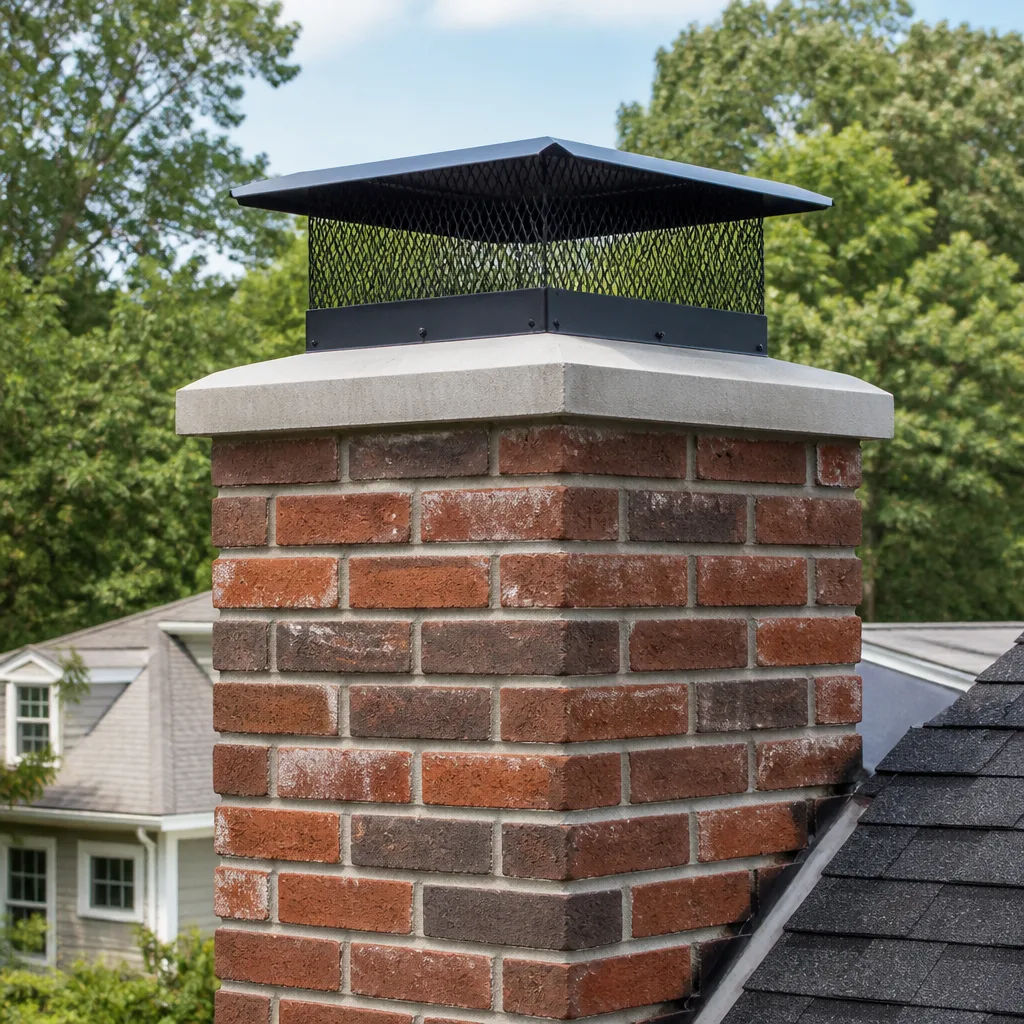 Caps & crowns
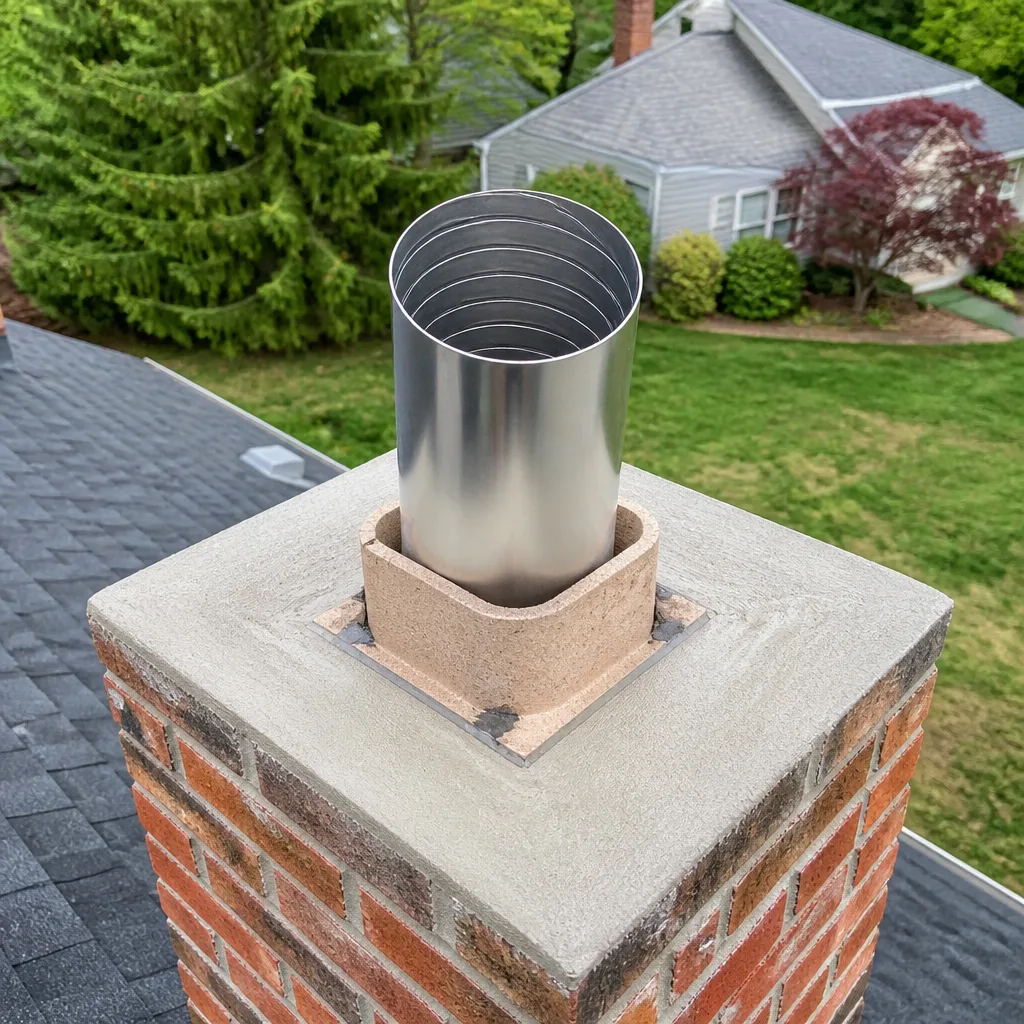 Flue relining
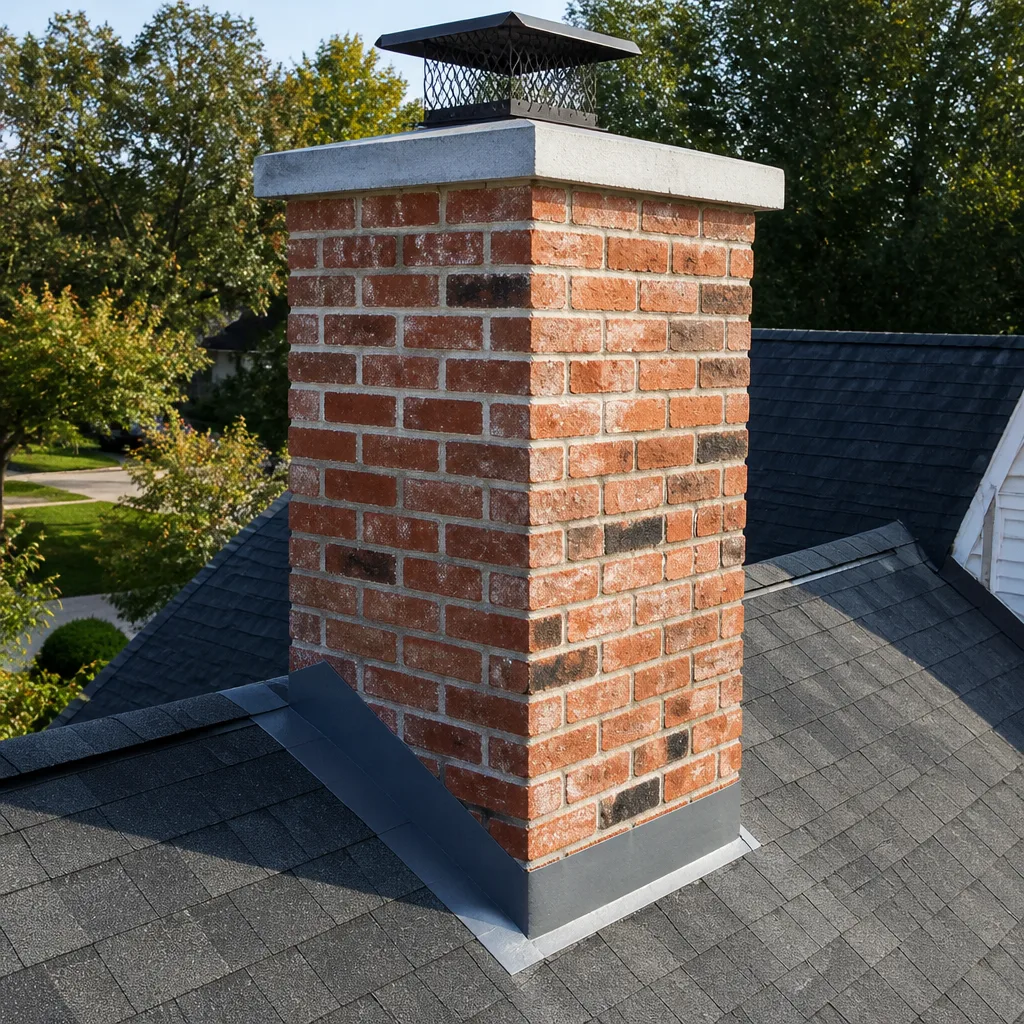 Masonry repair
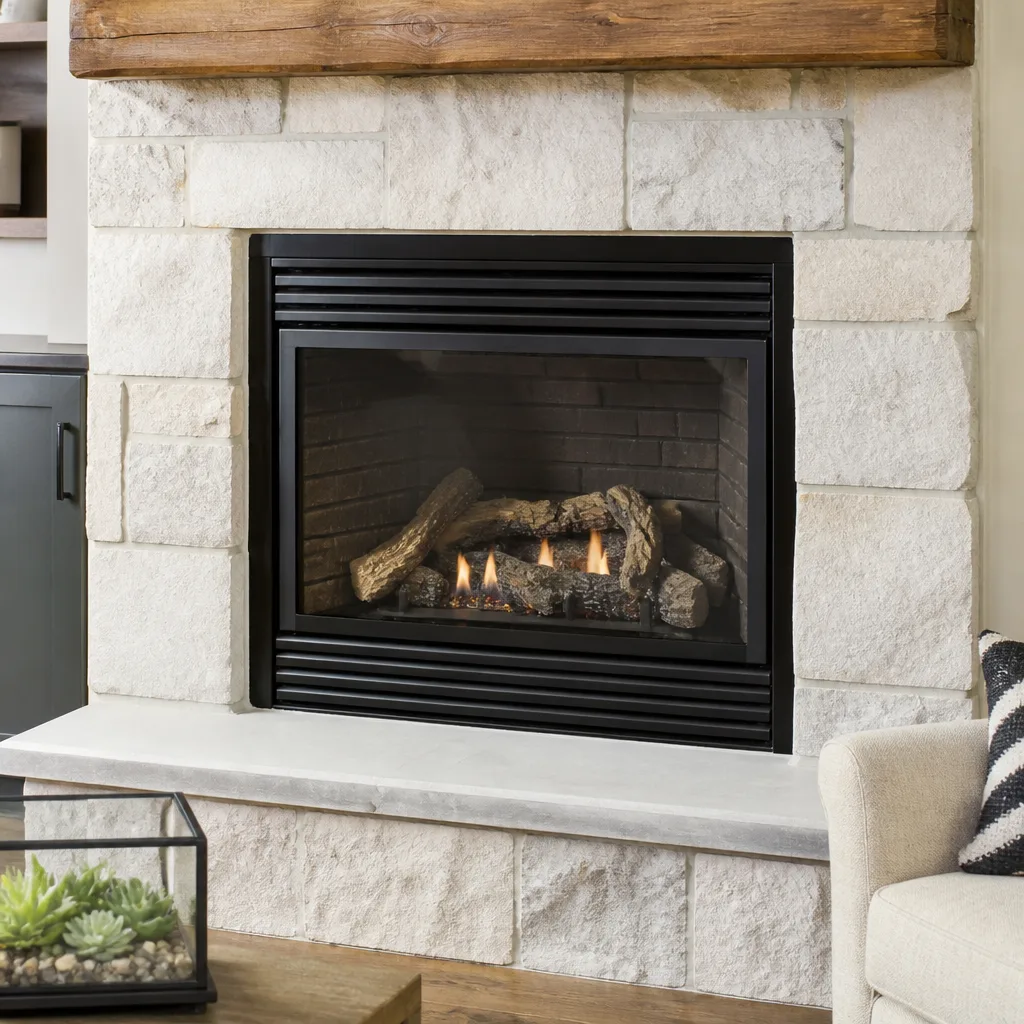 Gas fireplace service
Level 1 sweep and inspection to the NFPA 211 annual standard - flue, crown, cap, and flashing checked and photographed
Chimney sweep logs do not sweep chimneys. They loosen some creosote - which then falls where a brush and vacuum still have to collect it.
DIY vs Professional Chimney Cleaning: The Tacoma Homeowner’s Decision Guide
Chimney brush kits from hardware stores are sized for standard flues. If your Tacoma home has a non-standard liner from a previous insert installation, the brush won’t contact the walls evenly, and you’ll miss the buildup that matters most. That single fact is why this debate isn’t really about skill. It’s about access and diagnosis. A lot of homeowners can pull loose soot off a firebox wall with the right tools and an afternoon to spare. Very few can see inside a flue, read the condition of a smoke chamber, or tell stage-2 creosote from ordinary soot. In this guide we’ll draw that line honestly, so you can decide based on your actual chimney rather than a blanket rule about what homeowners should and shouldn’t do.
Quick Answer
DIY chimney cleaning is a reasonable option only for a chimney with a standard-sized flue, a light soot load from fewer than about 30 fires a season, and no known liner or smoke chamber issues. For anything beyond that, or if the chimney hasn’t been inspected in a while, professional cleaning is the safer and ultimately cheaper choice because it includes diagnosis. A homeowner can remove soot. Only a trained technician with a camera can tell you whether your flue liner is sound, whether creosote has glazed onto the walls, or whether the smoke chamber is doing its job. In Tacoma, we recommend a professional inspection first and a cleaning on the evidence.
Styles & brands we work with
- Sweep & inspection
- Caps & crowns
- Flue relining
- Masonry repair
- Gas fireplace service
Table of Contents
- What DIY chimney cleaning can realistically accomplish
- The three things you can’t assess without professional equipment
- The real cost comparison: DIY kit vs professional service
- The visual pre-check that makes a professional sweep faster and cheaper
- Liability and insurance after a self-performed cleaning
- How Tacoma’s housing stock changes the answer
- Scheduling around Tacoma’s burning season
- When it’s time to call a professional
What DIY Chimney Cleaning Can Realistically Accomplish
DIY cleaning works well for one narrow situation: a masonry fireplace or a standard flue, burning well-seasoned hardwood, fewer than roughly 30 fires per season, with a light coating of soft soot. In that case, a homeowner with the right tools can knock the soot loose, vacuum the firebox, and call it done. The key word is realistic. A brush kit is a maintenance tool, not a diagnostic one.
Here’s what you actually need if you’re going to do it properly:
- A correctly sized brush. Round poly or wire brushes come in standard diameters. Measure your flue opening and match the brush to the flue dimension, not the firebox. A brush that’s too small skips the walls; one that’s too big can wedge or damage a liner.
- Rods or a pull ring sized to the flue run. Rods longer than your flue is tall sound harmless. They aren’t. Too few and the brush won’t travel; too many and you can lose control of the head.
- A HEPA-rated vacuum. A shop vac without a fine-particle filter will blow soot back into the room. That’s a mess you can’t easily undo.
- Drop cloths, a dust mask, and eye protection. Soot is a lung irritant, and the mask matters more than the cloth.
- A plan for the creosote you dislodge. Everything that comes down the flue has to be bagged and disposed of. In Tacoma, that means checking your hauler’s rules for soot and creosote before you start.
If any of those pieces is missing, the job is likely to leave you with more soot in the room than you removed, or with a brush head stuck in the flue. And notice what’s absent from the list: anything that would let you actually see what you’re cleaning. That’s the next section.
The Three Things You Can’t Assess Without Professional Equipment
This is where the DIY-versus-professional debate actually lives. A homeowner with a brush can remove soot. Three specific problems require equipment and training to find, and all three are the ones that cause fires, carbon monoxide intrusion, and expensive repairs. We’ve seen each of them on a chimney that looked fine from the firebox.
1. Liner cracks and separation
A clay tile liner or a stainless flexible liner is your chimney’s only barrier between hot flue gas and your house’s framing. Cracks, gaps at the joints, and separated tiles aren’t visible from the firebox with a flashlight. A camera run down the flue shows them clearly, along with the photo evidence you can see for yourself. If you’re weighing relining, the systems we work with, including DuraFlex flexible liners and HeatShield ceramic restoration, are the kind of trade-grade materials that let a technician match the repair to the flue rather than forcing a generic fix.
2. Smoke chamber condition
Above the firebox, the smoke chamber narrows through a corbeled set of masonry ledges. That geometry is prone to collecting soot and creosote in corners a brush can’t reach, and the mortar on those ledges can deteriorate. The smoke chamber is one of the most common places a chimney fire starts. It’s also one of the least visible parts of the system from the ground.
3. Stage-2 and stage-3 creosote
Creosote has stages. Stage 1 is soft, flaky, and brushable. Stage 2 is glazed and hard, and a brush skates over it. Stage 3 is puffy and can look almost like a sponge, and it’s the most flammable. You can’t reliably tell stage 2 from stage 3 without a trained eye and a camera. What looks like a light coating from below can be a glazed layer higher up, and the cleaning method differs for each stage.
If you can’t answer all three of those questions about your own chimney, you don’t actually know whether it needs a cleaning, a repair, or nothing at all. That’s not a knock on you. It’s a statement about what a brush can see.
The Real Cost Comparison: DIY Kit vs Professional Service
The honest way to compare is on a multi-year basis, not a single cleaning. A brush kit is a one-time purchase. A professional cleaning is a recurring cost, but it includes inspection and diagnosis you don’t get from a kit. Here’s how the two paths typically break down:
| Item | DIY path | Professional path |
|---|---|---|
| Brush, rods, or pull ring | One-time purchase, varies by kit | Included in service |
| HEPA vacuum (if you don’t own one) | One-time purchase, varies by model | Included in service |
| Drop cloths, mask, eye protection | One-time purchase, varies | Included in service |
| Disposal of soot and creosote | Your time and your hauler’s rules | Included in service |
| Time per cleaning | An afternoon, plus cleanup | Booked appointment |
| Camera inspection and photo report | Not possible | Included |
| Diagnosis of liner, smoke chamber, creosote stage | Not possible | Included |
| Written estimate before work begins | Not applicable | Flat-price, agreed before booking |
Read that table once more and notice the asymmetry. The DIY kit is a sunk cost you carry forward, whether you use it once or five times. The professional sweep is a per-job cost that bundles in the diagnostic work. In the years your chimney is clean and sound, DIY looks cheaper on paper. In the year something is wrong, DIY means you spent the time and still didn’t learn what a camera would have told you in twenty minutes.
Our position is simple: a chimney sweep is the right call whenever diagnosis is part of the question. If you’re certain your flue is standard, your burn volume is light, and you’ve had a recent inspection clear it, the kit makes sense. If any of that is uncertain, it doesn’t. Call (844) 945-4427 for an exact quote on a sweep. Estimates are free, and the flat price is agreed before booking, so there’s no surprise on the invoice.
The Visual Pre-Check That Makes a Professional Sweep Faster and Cheaper
You can do real, useful prep work before we arrive without touching the inside of the flue. This is the part of DIY know-how that actually saves money. It helps the technician zero in on the right issue instead of spending the visit on discovery. Here’s how to do a legitimate visual pre-check:
- Step back and look at the exterior. From outside, note the condition of the cap and crown. A cracked crown or a missing cap is a water-entry problem, and water damage is what most often drives chimney repair. Write down what you see.
- Check the firebox for obvious damage. Cracks in the firebrick, crumbling mortar joints, and rusted or warped grate hardware are all worth flagging. Don’t try to repair brick yourself.
- Look at the damper. Open and close it. If it sticks, leaves a gap, or won’t seat, say so. A damper that doesn’t close properly affects how the chimney drafts.
- Note how much you’ve burned this season. Roughly how many fires, what kind of wood, and whether you’ve noticed creosote buildup on the glass doors or in the firebox. That history tells the technician what to expect in the flue.
- Smell and smoke clues. If the fireplace smokes into the room, if you smell creosote when it’s not burning, or if the draft feels weak, those are symptoms worth describing precisely.
- Have a clear path to the hearth and roof access. Furniture moved, pets settled, and a clear route to the cleanout or roof means less time on setup.
What you’re not doing here is sticking a camera or a rod up the flue. That’s the technician’s job, and a pre-check that flags obvious issues lets the sweep skip the discovery phase and get to cleaning and inspection. It’s also how you make the visit cheaper in the sense that matters: less time on the clock, and a clearer scope for the written estimate.
Liability and Insurance After a Self-Performed Cleaning
This is the part of the DIY debate almost nobody talks about until something goes wrong. If a chimney fire follows a cleaning you performed yourself, your homeowner’s insurer may ask what maintenance was done, when, and by whom. The exact questions depend on your policy and your carrier. In practice, insurers reviewing a chimney fire claim often look for documentation that the chimney was maintained and inspected.
What that means for a Tacoma homeowner is straightforward. A professional sweep leaves a paper trail: a written invoice, an inspection report, and photos of the flue. A DIY cleaning leaves a receipt for a brush kit. If you’re ever in the position of explaining to an adjuster how your chimney was maintained, the difference between those two records is significant.
We’re not in the business of telling you what your insurer will or won’t cover. That’s a conversation for your carrier. But the documentation point is real, and it’s worth weighing when you decide how to handle your chimney. A camera inspection and photo report included with a professional sweep gives you something you can actually hand to an adjuster later. That’s the part most DIY guides skip.
How Tacoma’s Housing Stock Changes the Answer
Tacoma is an old city with a wide range of housing, and that range matters for this decision. Neighborhoods like North End, Proctor, and the Stadium District have plenty of older homes where the original masonry fireplaces have been modified over the decades. Insert installations, liner replacements, and chimney rebuilds all leave traces. When a previous insert was added without a properly sized liner, the flue diameter can change, and a homeowner’s standard brush kit no longer fits the job.
In newer construction around Fircrest or the South End, you’re more likely to find a modern factory-built fireplace with a stainless liner. Those systems have their own cleaning requirements, and the brush and method differ from a masonry flue. The point isn’t that one kind of house is better. It’s that a single rule about DIY cleaning can’t account for the variety of chimneys across Tacoma.
The other local factor is the weather. Tacoma’s wet winters and shoulder seasons mean a chimney that sits unused for months is also a chimney that’s been exposed to moisture and temperature swings. Water entry through a cracked crown or missing cap is the most common cause of chimney damage we see. And no amount of interior brushing addresses it. That’s why cap and crown work is part of the same conversation as cleaning. If you want the full picture on your roofline, our guide to chimney cap & crown covers what to look for.
Scheduling Around Tacoma’s Burning Season
Chimney work in Tacoma has a natural rhythm. Most homeowners don’t think about the chimney until the first cold snap, which is also when every sweep in the area is booked. The practical move is to schedule before the burning season, not during it. A chimney that’s cleaned and inspected in the shoulder months is ready when you actually want to light a fire.
Here’s a simple seasonal checklist:
- Late summer to early fall: the best window for a sweep and inspection. The flue is dry, access is easier, and you have time to schedule any repair before the season starts.
- Before your first fire of the season: confirm the damper works, check the cap and crown visually, and make sure the firebox is clear.
- Mid-season: if you burn heavily, watch for signs of excess creosote. Glazed buildup on the firebox walls or glass doors means it’s time for a cleaning, not more fires.
- After the season: the right time for repairs you deferred, and for a crown or cap replacement while the weather is workable.
We answer 24/7, and dispatch runs 7am to 7pm Sunday through Friday, so scheduling around the season is easy. The urgency here is seasonal, not hourly. You don’t need to panic on a cold night; you need to plan before the season starts. A booked sweep is the whole point.
When It’s Time to Call a Professional
There are specific signals that mean the DIY path is over. If you smell creosote when the fireplace isn’t burning, if smoke rolls into the room instead of up the flue, if you’ve had a chimney fire (even a small one), or if you can see cracked or missing mortar in the firebox, stop and get an inspection. The same goes for any chimney that hasn’t been inspected in a while, any home you’ve just bought, and any flue with a non-standard liner.
A standalone inspection is exactly the right first step when you’re not sure. It’s a no-pressure diagnostic, so you get an honest assessment without committing to work on the spot. Nothing gets recommended without camera evidence you can see for yourself, and we’ll tell you plainly when a repair can safely wait. If you’re in Tacoma and want a straight answer about your chimney, our team offers free estimates. Call (844) 945-4427. We answer 24/7. Fast dispatch, 7am-7pm. Technicians with up to 10 years of experience work with trade-grade materials like Gelco, Olympia Chimney, and Famco, and the local pro is licensed and insured as their state requires.
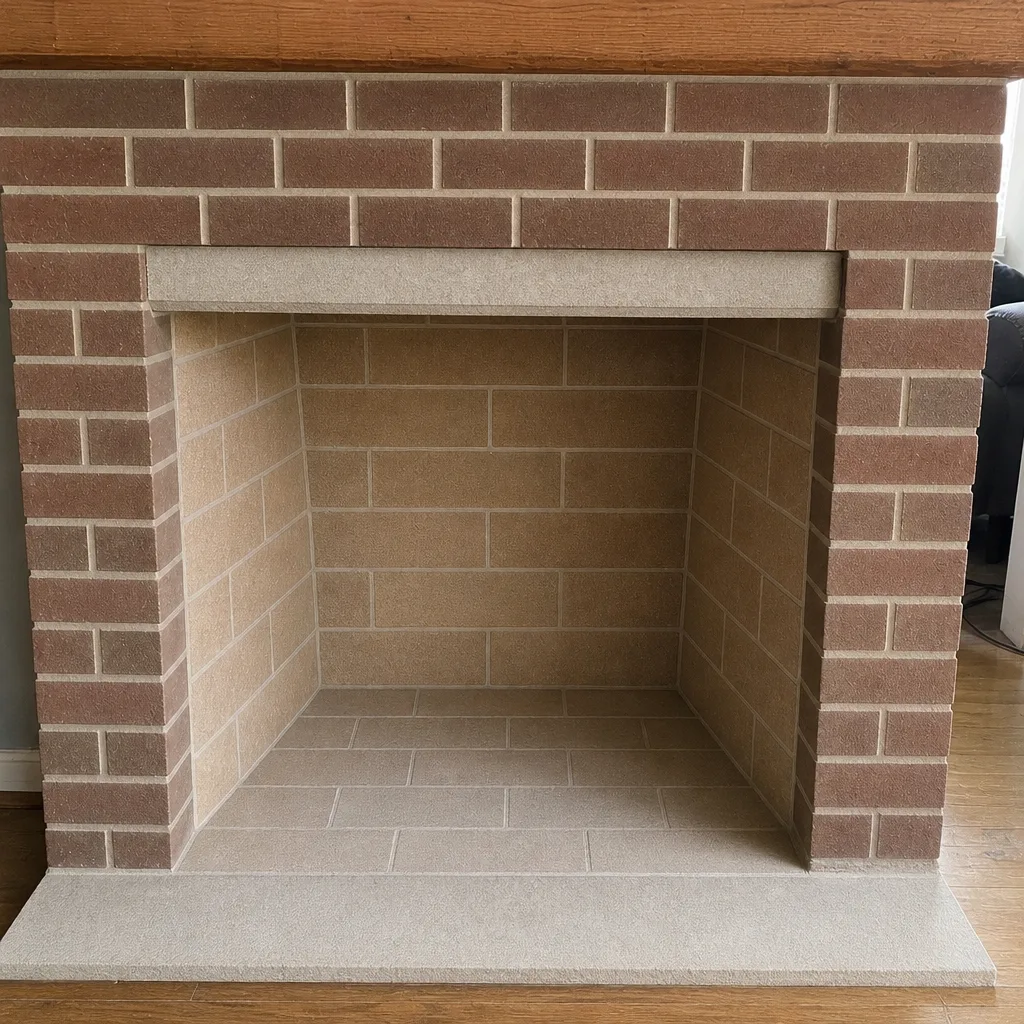
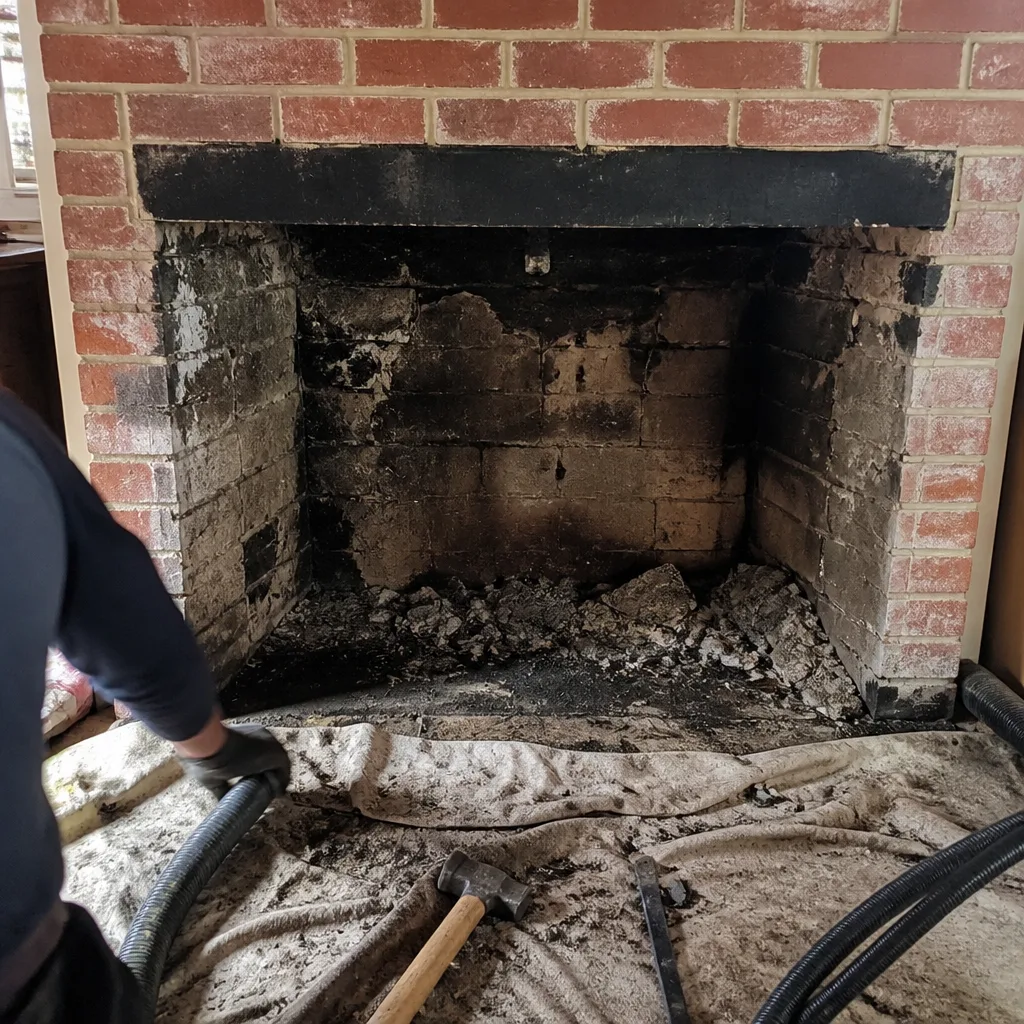
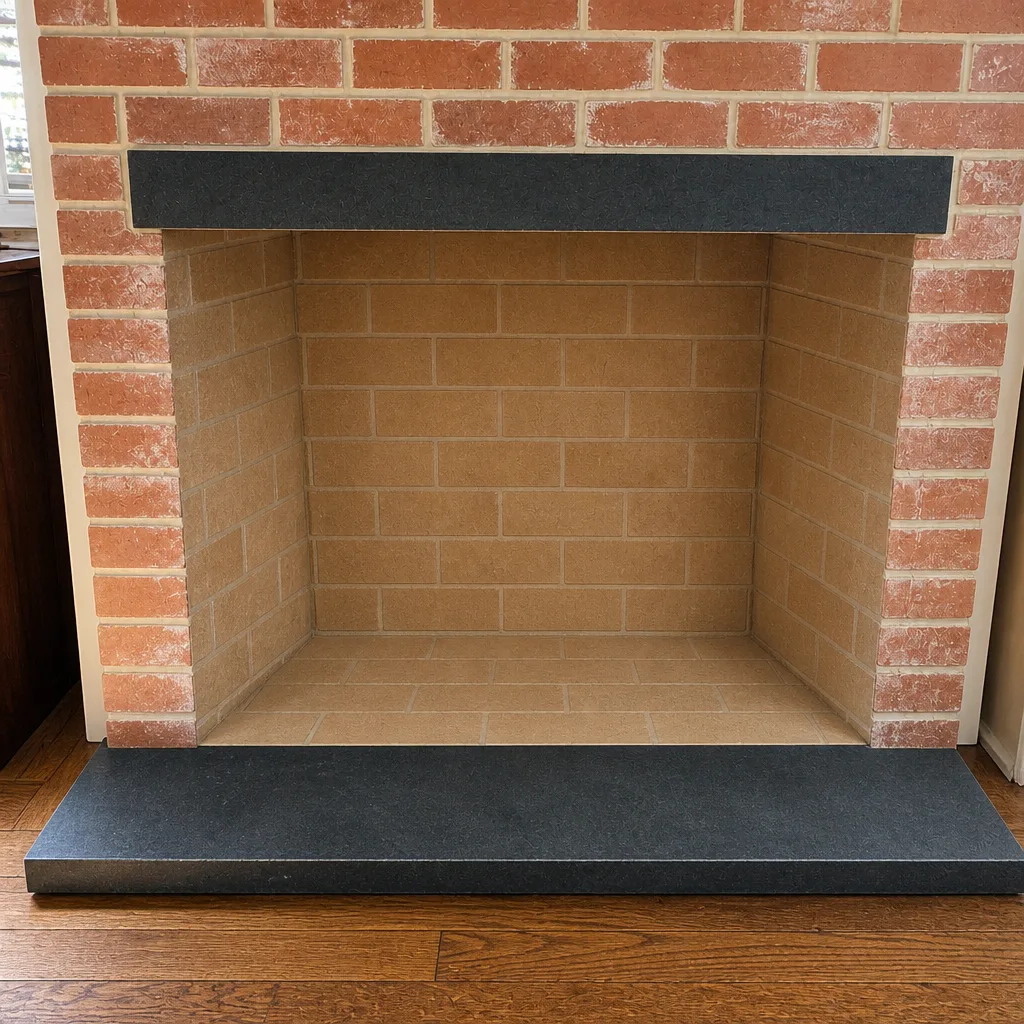
See the difference
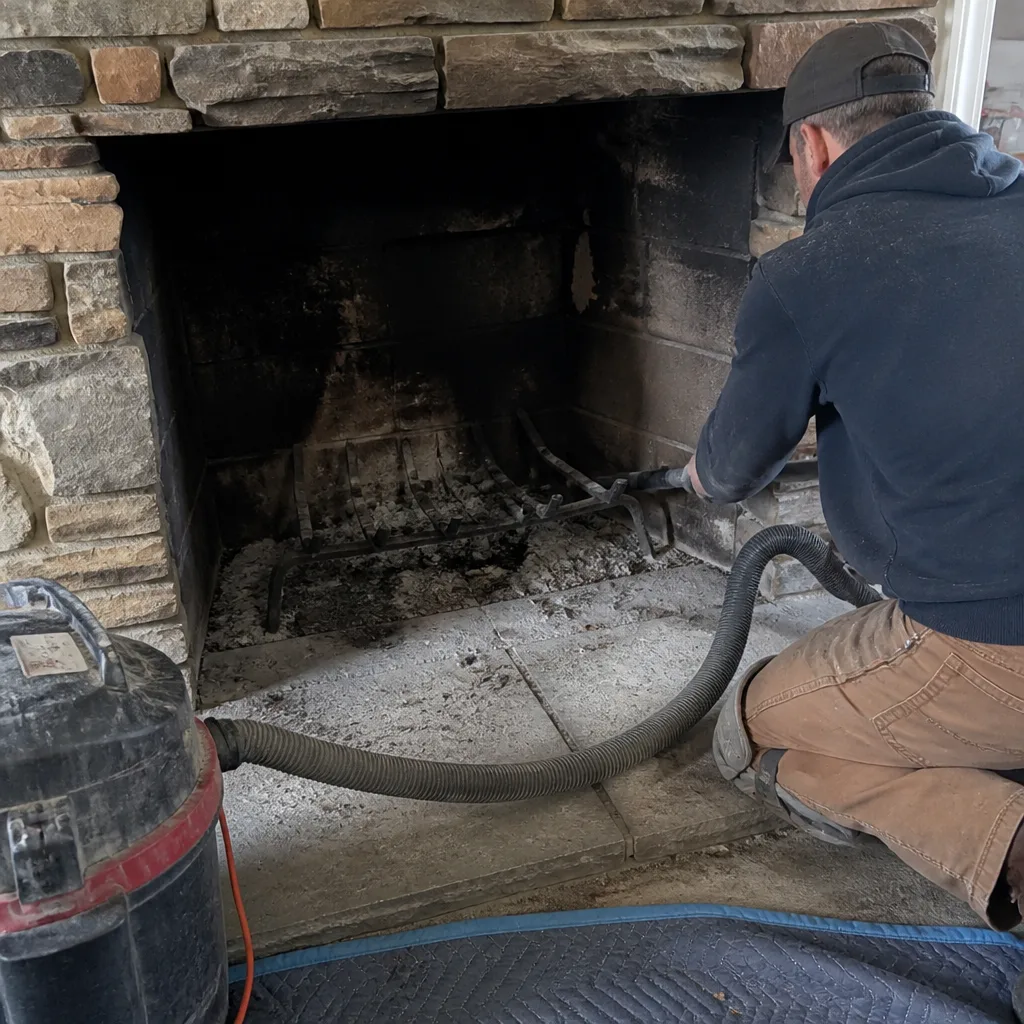 Before
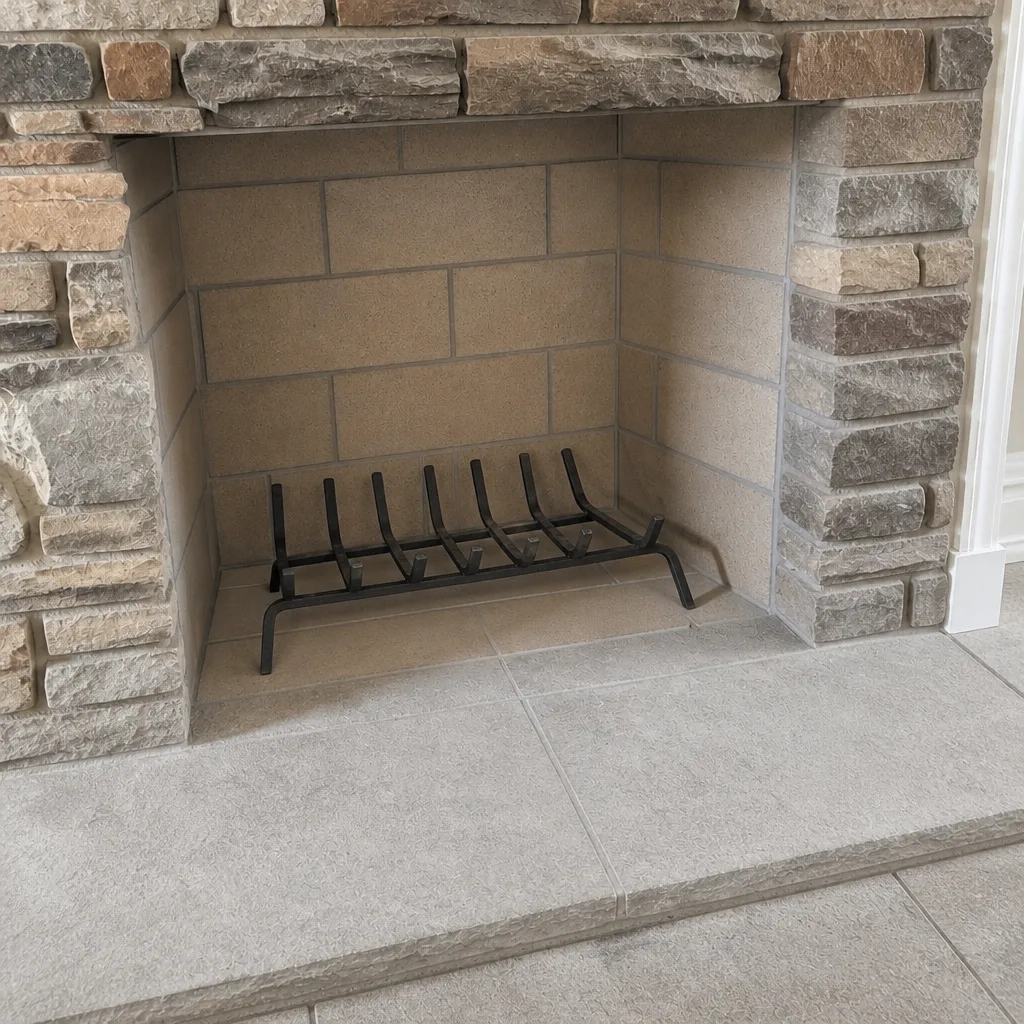 After
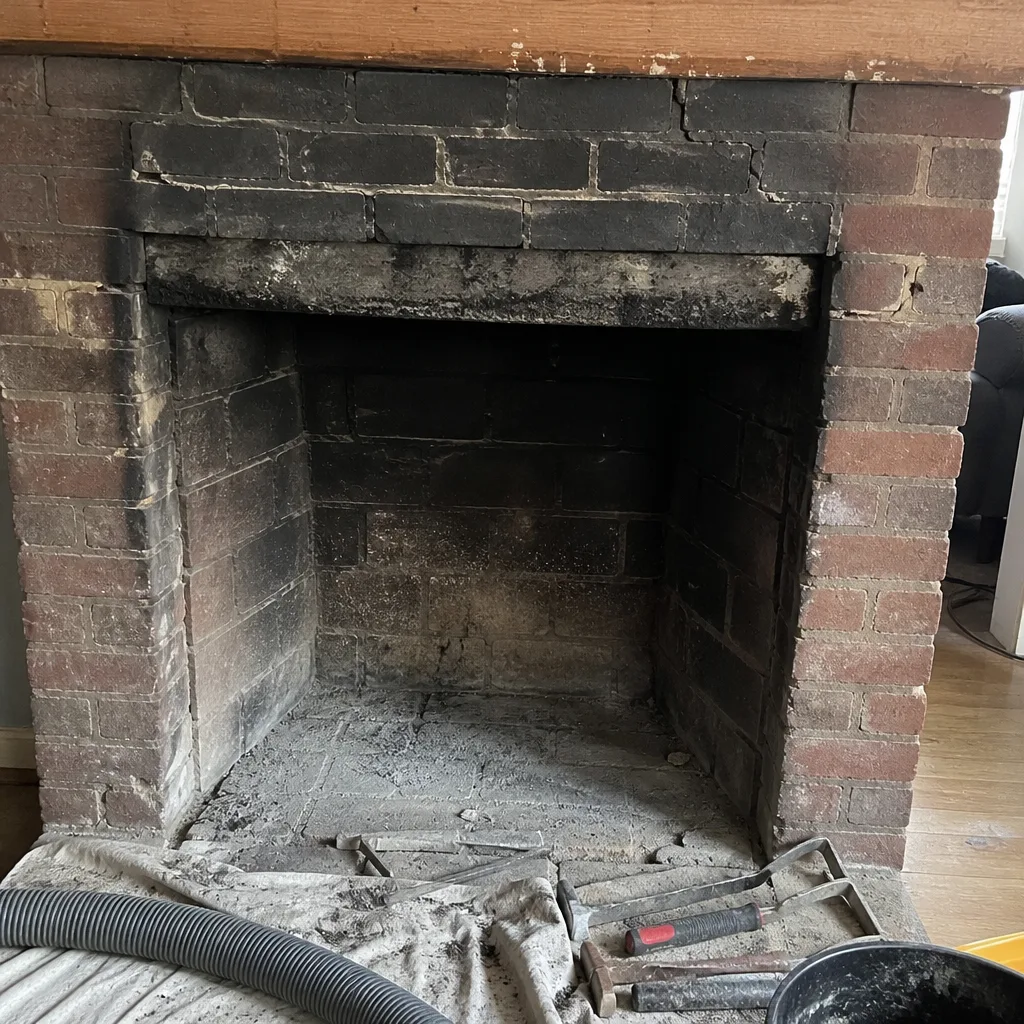 Before
 After
 Before
 After
Common Mistakes to Avoid
- Using a brush sized for the firebox, not the flue. The firebox opening is always wider than the flue. A brush that looks right at the hearth will rattle around in a flue that’s several inches narrower, and it won’t clean the walls.
- Skipping the HEPA filter on the vacuum. A standard shop vac pushes fine soot back into the room. Once it’s in the curtains and carpet, it’s a much bigger job than the cleaning itself.
- Assuming a light-looking firebox means a clean flue. Creosote glazes onto the flue walls higher up, where you can’t see it. The firebox is the least informative part of the system.
- Cleaning without inspecting. Cleaning is a maintenance task. Inspection is a diagnostic one. Doing the first without the second means you never learn whether the liner or smoke chamber is sound.
- Ignoring the cap and crown because the inside looks fine. In Tacoma’s wet climate, a cracked crown or missing cap is the most common path to chimney damage. Cleaning the flue doesn’t touch it.
- Treating a liner crack as a cosmetic issue. A cracked liner is a path for heat and carbon monoxide into the house. It’s the one finding you don’t want to get wrong.
- Waiting until the first cold week to book. That’s when everyone else calls too. Schedule in the shoulder months and you’ll have a clean, inspected chimney ready when you want it.
Frequently Asked Questions
Yes, in a narrow case: a standard flue, fewer than about 30 fires a season on seasoned hardwood, light soot, and a recent inspection that cleared the liner and smoke chamber. Outside that case, the cleaning itself may be doable but the diagnosis isn’t. If you’re not certain those conditions apply, book a professional sweep. Call (844) 945-4427 for an exact quote on a sweep. Estimates are free.
A chimney sweep is priced per job by a written estimate, so the exact cost depends on the flue, the creosote load, and whether an inspection is included. We set a flat price before booking, so you know the number before anyone arrives. Call (844) 945-4427 for an exact quote on a sweep. Estimates are free.
A chimney used regularly for wood should be swept when there’s about an eighth of an inch of soot or creosote on the flue walls, which for many households means once a year. A gas fireplace or a lightly used chimney may need it less often, but it still needs inspection. The right interval depends on how much you burn and what the flue looks like. Call (844) 945-4427 to book a sweep and get a straight answer about your own chimney.
Creosote builds up on the flue walls, and the glazed stages are the most flammable part of the system. A chimney fire can follow, and because a cracked liner lets heat and carbon monoxide into the house, a liner problem you didn’t catch is the more serious risk. Skipping maintenance is how a small issue becomes a large repair. Call (844) 945-4427 to get an inspection before the season. Estimates are free.
Only if a camera inspection shows the existing liner is cracked, separated, or the wrong size for the appliance. A liner is not a default recommendation. The local pro will show you the photo evidence and explain why a liner is or isn’t needed, and you can decide when you’re ready. Call (844) 945-4427 to schedule a standalone inspection.
Yes. Cap and crown work is part of the same roof-level visit as a sweep and inspection, which is why we handle it as its own service rather than sending you to a second contractor. If the crown is cracked or the cap is missing, that’s a water-entry problem worth fixing while the technician is up there. For fireplace-level repairs, our fireplace repair service covers the firebox side. Call (844) 945-4427 for a free estimate that scopes both.
The Bottom Line
DIY chimney cleaning is a maintenance tool, not a diagnostic one. If your flue is standard, your burn volume is light, and you’ve had a recent inspection, a properly sized brush kit and a HEPA vacuum can keep soft soot off the walls between professional visits. If your flue is non-standard, your creosote is glazed, your liner is cracked, or you simply don’t know the condition of your chimney, cleaning it yourself doesn’t answer the question that matters. The decision should follow your actual chimney, not a blanket rule. In Tacoma, a booked sweep with a camera inspection and photo report is the honest starting point. Once you know what’s inside, you can decide what to do about it.
We handle the whole chimney, from the firebox to the crown. Professional-grade materials from names like DuraFlex, HeatShield, Gelco, Olympia Chimney, Famco, and Copperfield mean a repair that matches the flue, not a hardware-store patch. If you want an honest assessment first, our team at Tacoma Chimney Sweep Co is ready to help. Call (844) 945-4427 for a free estimate. We answer 24/7. Fast dispatch, 7am-7pm.
Written by the team at Tacoma Chimney Sweep Co.